 By
Quick answer
Who should you see first for a hearing change in Dubai: an audiologist or an ENT doctor?
Start with an ENT (ear, nose and throat) doctor. An audiologist tests hearing and fits hearing aids. An ENT doctor finds out why your hearing changed and treats what can be treated. Dr. Muhammad Jabbr is a Consultant ENT surgeon who diagnoses and treats ear and hearing problems. He uses your hearing test results to plan your care. He sees patients at Medcare Hospital Al Safa, Dubai. See a doctor promptly if your hearing drops suddenly, even without pain.
If your hearing has changed, you may wonder who to see first. Is it an audiologist, or an ENT doctor? Looking for an audiology specialist in Dubai can feel confusing, because the two roles often work side by side but are not the same.
Dr. Muhammad Jabbr is a Consultant ENT and Head & Neck Surgeon at Medcare Hospital Al Safa. As the medical doctor in your hearing care, he looks for the cause, treats what can be treated and uses your test results to plan the next step.
This guide explains how ENT-led hearing care works, why it matters before you buy a hearing aid, and what follow-up looks like.
What Is the Difference Between an Audiologist and an ENT Doctor?
What an audiologist does
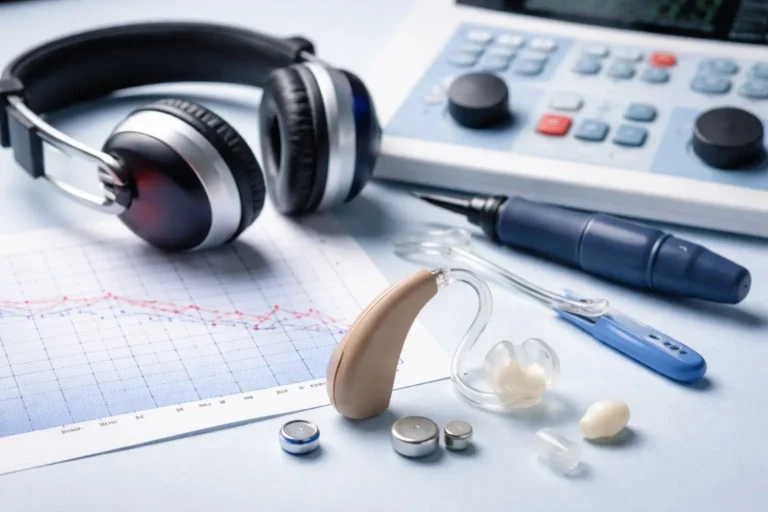
An audiologist is a hearing health professional. They are experts in measuring hearing and balance. They carry out hearing tests, fit and adjust hearing aids, and teach you how to use them. An audiologist is not a medical doctor. They do not prescribe medicines or perform surgery.
What an ENT doctor does
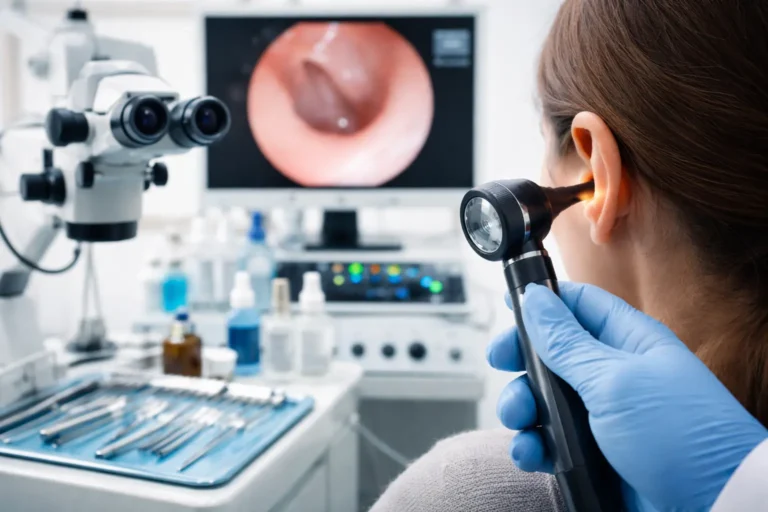
An ENT (ear, nose and throat) doctor, also called an otolaryngologist, is a medical doctor and surgeon. An ENT doctor can:
- Look inside your ear with a microscope or endoscope.
- Remove impacted wax, debris or a foreign body safely.
- Diagnose and treat ear infections, fluid behind the eardrum and eardrum holes.
- Order scans such as CT or MRI when needed.
- Prescribe medicines and perform ear surgery when it is the right choice.
In short, the audiologist measures how well you hear. The ENT doctor looks for why it changed and whether it can be treated.
Why Get an ENT Check Before a Hearing Aid?
Many people go straight to a hearing aid shop. A hearing aid makes sound louder and clearer, but it does not treat the reason your hearing dropped. If that reason is treatable, you may not need one at all.
Think about what a hearing aid cannot do for you:
- It cannot clear a blocked ear canal. If the problem is simply wax, a hearing aid would be the wrong tool.
- It cannot dry up a discharging ear. An ear that keeps leaking needs medical treatment, and a hearing aid mould may even make it worse.
- It cannot repair a perforated eardrum or a stiff middle ear bone (otosclerosis). In suitable patients, an operation may improve hearing.
- It cannot tell you why one ear is worse than the other. That question needs a doctor.
There is another reason to see a doctor first. Hearing loss in one ear only, ringing in one ear, or hearing loss with dizziness can sometimes point to something that needs a scan, such as an MRI. The more common reasons hearing fades are covered on our hearing loss causes and prevention page.
How Does ENT-Led Hearing Care Work in Dubai?
- Your story. Dr. Jabbr asks when the change started, whether it affects one or both ears, and if you have ringing, pain, discharge, dizziness or blocked feelings. He also asks about noise exposure, past ear problems and medicines.
- Ear examination. He examines each ear under magnification. Wax, an infection, fluid behind the eardrum or a perforation can often be seen at this first visit.
- Hearing testing. You may be sent for a hearing test. This gives a clear record of how well each ear hears.
- Putting it together. Dr. Jabbr matches what he saw in the ear with the test results to reach a diagnosis.
- Your plan. Depending on the cause, this may be wax removal, medicine, watching and re-testing, a scan, surgery, or a referral for hearing aids.
To see the other ear conditions he manages, visit his ear specialist (otology) page.
What Is the Hearing Aid Pathway?
When the cause of hearing loss is permanent, such as age-related or noise-related inner ear damage, a hearing aid is often the most helpful option.
Medical clearance first
Before fitting, your ear should be healthy and free of active infection or blockage. A doctor's check helps make sure nothing treatable has been missed. It also helps decide which ear, or both, would benefit.
Choosing and fitting
An audiologist helps you choose a hearing aid that suits your hearing level, ear shape and daily life. It is then tuned to your hearing test, often over a few visits.
Getting used to it
Your brain needs time to adjust to new sounds. At first, your own voice or background noise may seem loud. This is normal, and it usually gets easier over a few weeks of daily use. A hearing aid helps you hear more clearly, but it does not bring back normal hearing.
When hearing aids are not enough
For severe to profound hearing loss, a hearing aid may give little benefit, even when it is set well. In that case, Dr. Jabbr may refer you for an assessment for other options, such as a cochlear implant. For some people with a long-term leaking ear, a bone-conduction hearing device may also be discussed.
Why Does Follow-Up Matter?
Hearing care is rarely a one-time visit. Follow-up helps you get the most from treatment.
- After treatment. If you had wax removed, an infection treated or ear surgery, a repeat check and hearing test show whether hearing has improved.
- With a hearing aid. Regular reviews let the settings change as your hearing does, and your ears can be checked for wax.
- For long-term conditions. An old eardrum perforation or inner ear loss that is slowly getting worse may need checks over months or years. These visits help spot changes early.
- For children. If a child's speech seems slow, a hearing check is a sensible early step. Learn more about speech delay and hearing in children.
Looking for an Audiology Specialist in Dubai? Why Start With Dr. Jabbr
Most people searching for an audiology specialist in Dubai want to know why their hearing changed and what can be done. An ENT surgeon can answer both. When hearing loss may have a medical cause, many patients count Dr. Jabbr among the best ear doctors in Dubai for a first hearing review.
- Consultant ENT and Head & Neck Surgeon at Medcare Hospital, Al Safa, Dubai.
- Qualifications: MD, MS, DOHNS (England), European Board ORL-HNS and Arab Board ORL-HNS.
- More than 20 years of experience and more than 3,000 ENT procedures.
- Sees both adults and children.
- A 4.9 Google rating from 406 patient reviews.
He can offer medical and surgical ear care, and he will tell you when a hearing aid is the better route.
When Should You Get Urgent Medical Help?
Some hearing changes should not wait for a routine visit. Ask for a prompt medical check if you notice:
- Hearing that drops suddenly in one or both ears, over hours or a few days, even without pain. Early treatment may help, so do not wait.
- A sudden drop in hearing while you already wear a hearing aid. Do not assume the device is at fault.
- A hearing change together with strong dizziness, a spinning room or trouble standing.
- A painful ear with high fever, or a painful, swollen area behind the ear.
- Any hearing change after a blow to the head.
- One side of the face becoming weak or drooping. Go to an emergency department.
Book an Appointment
If your hearing worries you, or you are thinking about a hearing aid, start with an ear check. Book a visit with Dr. Muhammad Jabbr online, or phone +971 52 751 7811.
He sees patients at Medcare Hospital, Hadiqa Street, Al Safa 1, Dubai. Bring any past hearing reports, a list of your medicines and your hearing aid if you have one.
Frequently Asked Questions
Is Dr. Muhammad Jabbr an audiologist?
No. He is a Consultant ENT surgeon who diagnoses and treats ear conditions. Hearing tests and hearing aid fitting are usually done by an audiologist, and he uses those results to guide your care.
Do I need to see an ENT doctor if I only want a hearing aid?
It is wise to have your ears checked first. A doctor can rule out wax, infection, fluid or other treatable causes. Sometimes treating the cause improves hearing without one.
What if the ENT doctor finds nothing to treat?
That is still useful news. It means no treatable problem was found in the ear. You can then go ahead with a hearing aid fitting and keep up regular reviews.
Who should I see first for ringing in my ears with hearing loss?
An ENT doctor is a good first stop. Ringing with hearing loss, especially in one ear only, needs a medical check. A hearing test is usually part of that visit, and a scan is sometimes advised.
How often should I have a follow-up if I wear hearing aids?
Many people need a review every year, or sooner if hearing seems to change. Your ears should also be checked for wax, which can build up behind a hearing aid.
Does Dr. Jabbr see children with hearing concerns?
Yes. He treats both adults and children. Common reasons for a child's visit include repeated ear infections, slow speech and glue ear, which often affects hearing for a time.
Getting the Right Help for Your Hearing
Good hearing care starts with knowing why your hearing has changed. The audiologist measures it. The ENT doctor looks for the cause and treats what can be treated.
With Dr. Muhammad Jabbr, you get a medical check first and a plan that fits you, whether that means simple treatment, surgery or a hearing aid.