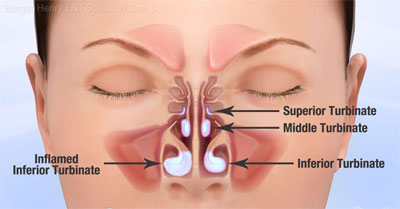
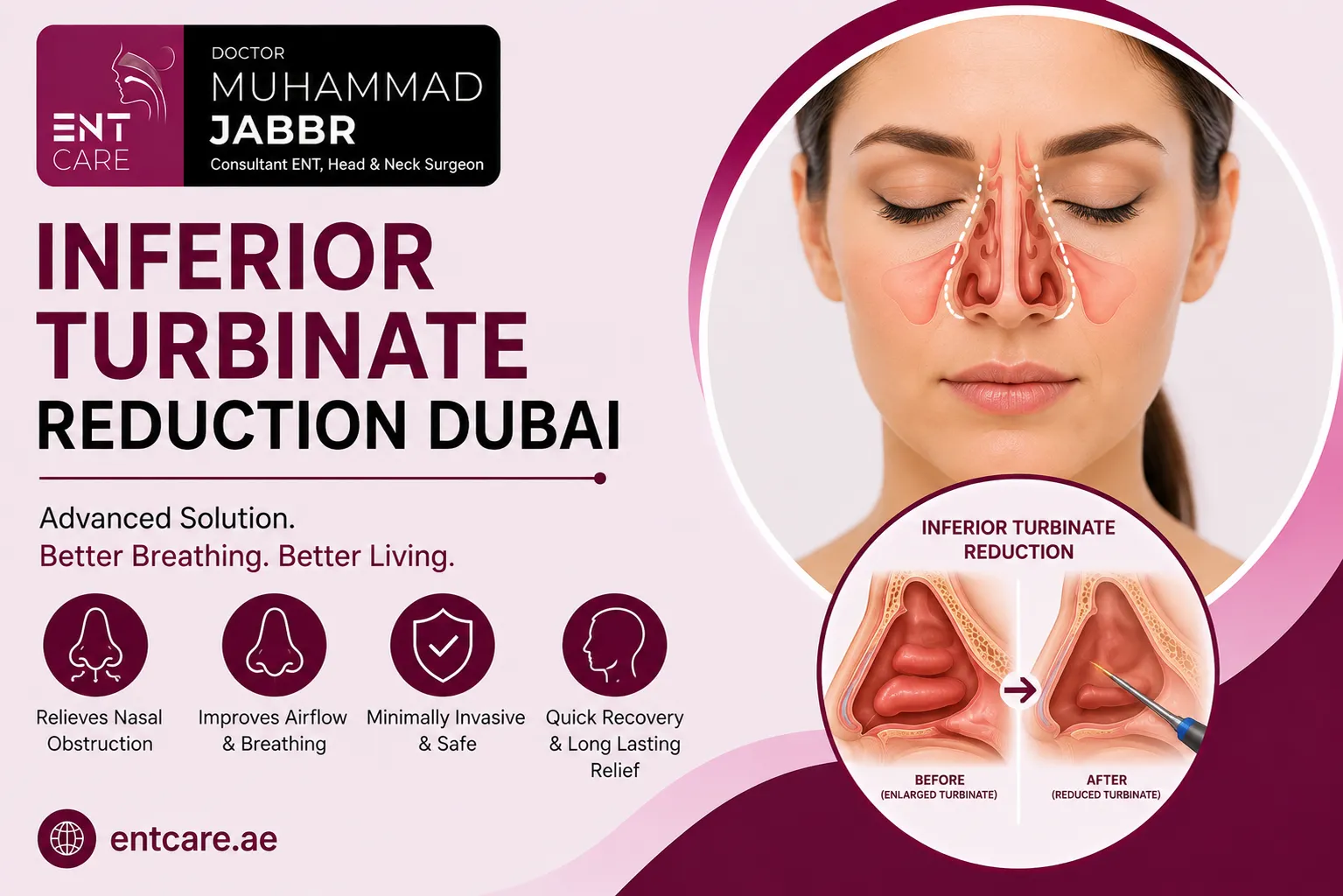
What Are Inferior Turbinates?
Inferior turbinates are normal structures inside the nose that:
- Humidify air
- Filter particles
- Warm inhaled air
When enlarged (inferior turbinate hypertrophy), they cause:
- Chronic nasal obstruction
- Mouth breathing
- Snoring
- Sleep disturbance
- Reduced exercise tolerance
What Causes Inferior Turbinate Hypertrophy?
Common causes include:
Allergic Rhinitis
Chronic Sinusitis
Persistent sinus inflammation.
Deviated Septum
Compensatory turbinate enlargement.
Environmental Irritants
Dust, pollution, climate conditions in Dubai.
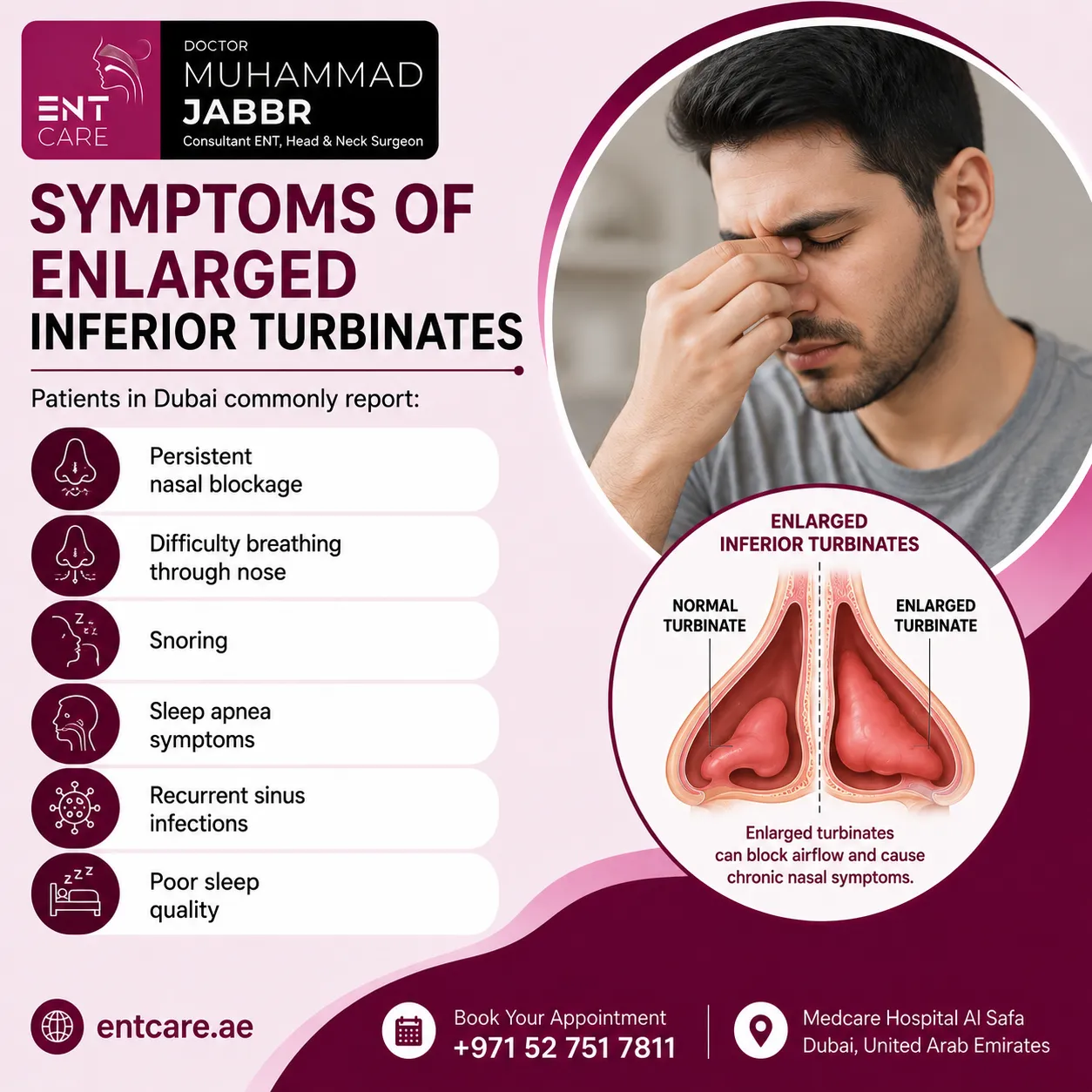
Symptoms of Enlarged Inferior Turbinates
Patients in Dubai commonly report:
- Persistent nasal blockage
- Difficulty breathing through nose
- Snoring
- Sleep apnea symptoms
- Recurrent sinus infections
- Poor sleep quality
If symptoms persist despite medication, surgical evaluation is necessary.
When Is Inferior Turbinate Reduction Surgery Needed?
Surgery is recommended when:
- Nasal sprays fail
- Antihistamines provide no relief
- Chronic obstruction persists
- Sleep quality is affected
- CPAP intolerance due to nasal blockage
Expert evaluation by a Consultant ENT surgeon is essential.
Types of Inferior Turbinate Reduction Techniques Used in Dubai
Dr Muhammad Jabbr selects the most appropriate technique:
Radiofrequency Turbinate Reduction
Minimally invasive internal shrinkage.
Microdebrider Turbinate Reduction
Precision tissue reduction.
Submucosal Turbinate Reduction
Preserves nasal function.
Turbinate Reduction with Septoplasty
For combined deviated septum cases.
Turbinate Reduction with LASER
New technology to reduce the size of inferior turbinates.
Technique selection is customized to each patient.
Why Choose Dr Muhammad Jabbr for Turbinate Reduction in Dubai?
Patients searching for the best nasal surgeon Dubai, best ENT doctor Dubai, or turbinate reduction specialist Dubai choose Dr Muhammad Jabbr for consultant-level expertise.
Consultant Experience
- 20+ years ENT experience
- Advanced nasal surgery specialist
- Sinus surgery expertise
- Precision surgical techniques
Advanced Technology
- High-definition nasal endoscopy
- Image-guided evaluation
- Minimally invasive surgical methods
How Inferior Turbinate Reduction Surgery Is Performed
Procedure details:
- Performed under local or general anesthesia
- Endoscopic visualization
- Internal turbinate tissue reduction
- Preservation of nasal mucosa
No external incisions. Minimal bleeding. Day surgery in most cases.
Recovery After Turbinate Reduction Surgery
Patients experience:
- Mild congestion for a few days
- Improved breathing within weeks
- Minimal discomfort
- Rapid return to normal activities
Post-operative care ensures optimal results.
Benefits of Inferior Turbinate Reduction
Patients report:
- Significant improvement in nasal breathing
- Better sleep
- Reduced snoring
- Improved CPAP tolerance
- Enhanced quality of life
This is a highly effective solution for chronic nasal obstruction.
Turbinate Reduction vs Septoplasty – What Is the Difference?
| Condition | Turbinate Reduction | Septoplasty |
|---|---|---|
| Enlarged Turbinates | Yes | No |
| Deviated Septum | No | Yes |
| Combined Case | Both Procedures | Both Procedures |
Comprehensive ENT evaluation determines the best treatment plan.
FAQs – Inferior Turbinate Reduction in Dubai
Q: What is inferior turbinate reduction?
A: Inferior turbinate reduction is a surgical procedure to shrink enlarged nasal turbinates and improve breathing.
Q: Is turbinate reduction painful?
A: The procedure is minimally invasive with mild post-operative discomfort.
Q: Is turbinate reduction permanent?
A: Most patients experience long-term improvement, especially when underlying allergies are managed.
Q: Who performs turbinate surgery in Dubai?
A: Dr Muhammad Jabbr provides advanced turbinate reduction surgery in Dubai.
Book Consultation for Nasal Blockage Surgery in Dubai
If you suffer from chronic nasal obstruction, expert evaluation is essential. Consult Dr Muhammad Jabbr, Consultant ENT Surgeon, Dubai.