 By
Quick answer
Who treats sudden hearing loss in Dubai, and how quickly should you be seen?
Dr. Muhammad Jabbr is a Consultant ENT (ear, nose and throat) surgeon who treats sudden hearing loss as an urgent problem. He sees patients at Medcare Hospital Al Safa, Dubai. Sudden hearing loss usually affects one ear, and it is often there when you wake up. Ideally, see him within 72 hours, because treatment seems to work better when it starts early. Call 998 if the hearing loss comes with face weakness, slurred speech or a sudden, severe headache.
You wake up and one ear sounds dull. Maybe it feels full, or a phone call on that side sounds far away. Many people think it is wax or a cold and wait. With sudden hearing loss, waiting can cost you hearing. If this is happening to you, the right step is to see a sudden hearing loss doctor in Dubai within days, not weeks.
Dr. Muhammad Jabbr is a Consultant ENT and Head & Neck Surgeon at Medcare Hospital, Al Safa. With more than 20 years of experience, he is one of the best ENT doctors in Dubai to see for sudden hearing loss. He treats it as an urgent problem, not a routine one.
What is sudden sensorineural hearing loss?
Doctors call it sudden sensorineural hearing loss, or SSNHL. "Sensorineural" means the problem is in the inner ear (the cochlea) or in the hearing nerve. It is not a blockage in the ear canal or the middle ear.
It develops fast, within 72 hours at most. Often it is there when you wake up. In most people only one ear is affected.
Common signs include:
- Hearing in one ear suddenly becomes muffled or very quiet
- A full or pressure feeling in the ear, without pain
- New ringing, hissing or buzzing on the same side
- Dizziness or a spinning feeling in some people
In many cases no single cause is found. Doctors think it may be linked to a viral infection, a problem with the blood supply to the inner ear, or swelling inside the cochlea. Less often it is linked to an immune condition, a head injury or certain medicines.
Why should you see a doctor within 72 hours?
Sudden sensorineural hearing loss is treated as an ear emergency. The inner ear is delicate. Treatment, when it helps, seems to work better when it starts early. Ideally you should be seen within 72 hours. If more time has passed, still get checked.
Do not try to clear the ear yourself with cotton buds or ear candles. When you call an ENT clinic, say the words "sudden hearing loss" so the team can see you sooner.
Call 998 or get to an emergency department now if your hearing drops together with:
- Weakness or drooping of the face, arm or leg
- Slurred speech, double vision or confusion
- A sudden, severe headache
- Severe dizziness that stops you from standing or walking
- Sudden hearing loss in both ears at the same time
The urgent hearing test: what happens at the visit
Dr. Jabbr will first ask when the hearing changed, which ear is affected and whether you have ringing or dizziness. He will also ask about colds, flights, loud noise, medicines and conditions such as diabetes.
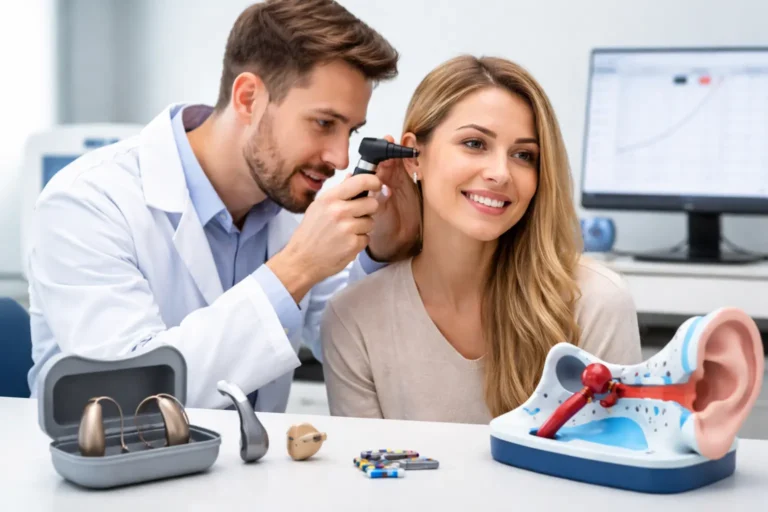
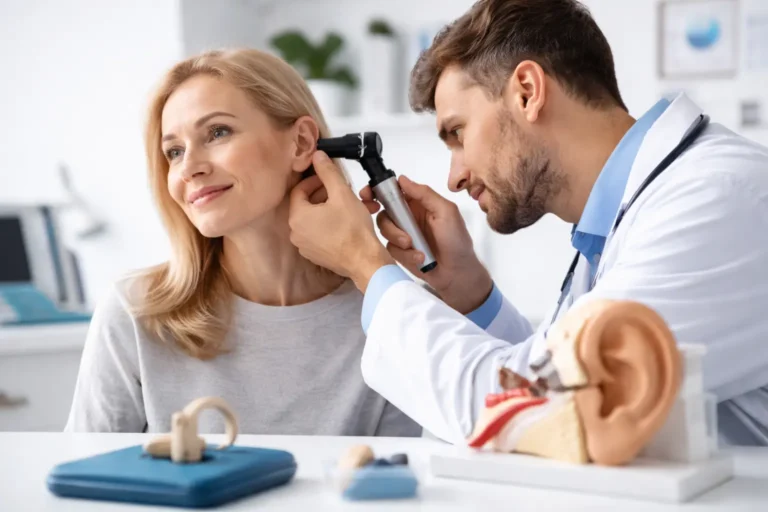
Then he will look inside your ears with a microscope or otoscope. This checks for wax, fluid behind the eardrum or a hole in the eardrum. These change the plan completely. He may also check your balance, eye movements and face muscles.
A tuning fork test gives a quick early clue. But the key step is a formal hearing test in Dubai on the same day or as soon as possible. This includes:
- Pure tone audiometry – you listen to beeps at different pitches. This measures how much hearing has dropped and confirms if it is sensorineural.
- Tympanometry – gentle air pressure in the ear canal checks how the eardrum moves and whether there is fluid behind it.
This first audiogram becomes the starting point to measure your recovery.
How is sudden hearing loss treated with steroids?
Once the loss is confirmed as sensorineural, the most common treatment is a steroid. Steroids reduce inflammation (swelling) inside the inner ear. They do not help everyone, and the benefit varies, but they are the usual first option. The plan depends on your health and how bad the loss is.
Steroid tablets by mouth
Often this is a short course of steroid tablets taken for about one to two weeks, with the dose reduced towards the end. Some people notice poor sleep, mood changes or stomach upset. Blood sugar can rise, so tell the doctor about diabetes, ulcers, glaucoma or high blood pressure first.
Steroid injections into the ear
This is called an intratympanic injection. After numbing the eardrum, a fine needle places steroid medicine into the middle ear. From there it soaks into the inner ear. It is done in the clinic. Afterwards you lie still for a short while with your head turned, so the medicine stays in place.
Ear injections may be used when tablets are not safe for you, together with tablets, or as a "rescue" when hearing has not improved enough. A course is often a few injections over one to two weeks. Brief dizziness can happen, and rarely a small hole in the eardrum stays.
Vitamins, antiviral tablets and blood-flow medicines are not routinely advised, as studies have not shown a clear benefit.
Why might you need an MRI scan?
If the loss is in one ear, an MRI scan of the hearing nerves and brain is usually advised. This is a careful check, not a sign that something serious is expected. It does not need to happen before treatment starts.
The main aim is to rule out a vestibular schwannoma, also called an acoustic neuroma. This is a slow-growing, non-cancerous growth on the hearing and balance nerve. It is rare, but it can first show up as sudden one-sided hearing loss.
The MRI uses no X-rays. Sometimes a contrast dye is given through a small needle in the arm. If you cannot have an MRI, another plan will be discussed.
Will your hearing come back? Recovery expectations
The honest answer is that it varies. Many people get back some or all of their hearing. Some of this recovery happens on its own, even without treatment.
Recovery tends to be better when:
- The hearing loss is mild to moderate rather than severe
- Treatment starts early, within the first days
- Only the low pitches are affected
- There is no dizziness with the hearing loss
Most improvement happens in the first few weeks. Some still improve slowly over two to three months. Repeat hearing tests show how the ear is responding.
If some hearing does not come back, you still have good options. A hearing aid may help with partial loss. For severe loss in one ear, special devices can send sound from the poor side to the good ear. In selected cases a cochlear implant may be considered.
Why see Dr. Jabbr as your sudden hearing loss doctor in Dubai?
Sudden hearing loss needs an ENT who acts quickly and checks carefully. Dr. Muhammad Jabbr's training includes MD, MS, DOHNS (England), the European Board in ORL-HNS and the Arab Board in ORL-HNS. He has performed more than 3,000 ENT procedures and cares for adults and children.
His work as an otology specialist in Dubai covers the ear and hearing in detail. At Medcare Hospital, Al Safa, he can examine your ear, arrange the hearing test, start treatment and request an MRI when needed. Patients have given him a 4.9 Google rating from 406 reviews.
For longer-term hearing problems and ways to protect your ears, see our guide to common hearing loss causes and prevention tips.
Book an urgent appointment
If your hearing dropped suddenly in the last few days, please do not wait. Book online with Dr. Muhammad Jabbr at Medcare Hospital, or call +971 52 751 7811 and mention sudden hearing loss so the team knows it is urgent.
The clinic is at the ENT Department, Medcare Hospital, Hadiqa Street, Al Safa 1, Dubai. For directions, see our contact page.
Frequently Asked Questions
Is sudden hearing loss in one ear an emergency?
Yes. It should be checked by an ENT doctor within a few days, ideally within 72 hours. If it comes with face weakness, slurred speech or a severe headache, go to an emergency department at once.
How can I tell if it is just wax or sudden hearing loss?
You often cannot tell at home, because both can feel like a blocked ear. An ear exam and a hearing test show the difference quickly.
Is it too late for treatment after two weeks?
Treatment seems to work best when it starts early. It may still be offered in the first few weeks, for example as steroid injections into the ear, depending on your hearing test.
Do steroid injections into the ear hurt?
The eardrum is numbed first, so most people feel only pressure or brief discomfort. Some feel a short spell of dizziness afterwards.
Can I take steroids if I have diabetes?
Often yes, but your blood sugar needs closer checks while you take the tablets. In some cases, steroid injections into the ear may be preferred, as less medicine reaches the rest of the body.
Can sudden hearing loss happen again?
It is uncommon, but it can. Repeated drops in hearing, especially with dizziness, may point to another inner ear condition such as Meniere's disease. Get any new drop checked straight away.
Act fast to protect your hearing
Sudden hearing loss is easy to brush off as a blocked ear, but it deserves urgent care. Early hearing tests, the right steroid treatment and a careful MRI check give your ear the fairest chance. If you need a sudden hearing loss doctor in Dubai, Dr. Muhammad Jabbr at Medcare Hospital, Al Safa, can check your ear and guide you through each step.