 By
Quick answer
Who offers hearing loss treatment and surgery in Dubai, and when should you see a doctor?
Dr. Muhammad Jabbr is a Consultant ENT (ear, nose and throat) surgeon who treats hearing loss in adults. He sees patients at Medcare Hospital Al Safa, Dubai. He treats everything from a simple earwax blockage to problems that need ear surgery. Slow hearing loss can wait for a routine visit. If your hearing drops suddenly, see an ENT doctor within a day or two. Go to an emergency department if hearing loss comes with severe dizziness or a drooping face.
Most adults do not lose their hearing overnight. It fades a little at a time, and family members often notice before you do. Phone calls take more effort. Busy dinners leave you tired. A hearing loss doctor in Dubai can find out which part of the ear is affected, what is causing it and what can be done.
Dr. Muhammad Jabbr is a Consultant ENT and Head & Neck Surgeon at Medcare Hospital, Al Safa. He is one of the best ENT specialists in Dubai to see for adult hearing loss, from a simple wax blockage to ear surgery.
This guide explains the three types of hearing loss in adults, the common causes, how your hearing is checked and the treatment choices you may have.
How Does Normal Hearing Work?
Sound makes the eardrum vibrate. Three tiny middle ear bones pass this movement to the inner ear (cochlea). There, thousands of tiny hair cells turn sound into nerve signals for the brain. Where along this path the problem sits decides the type of hearing loss.
What Are the Types of Hearing Loss in Adults?
Conductive hearing loss
Here, sound cannot pass well through the outer or middle ear. The inner ear and nerve usually work fine. Sounds seem quiet or muffled, but speech is often clear once it is loud enough. Many causes of conductive loss can be treated, and hearing may improve a lot.
Sensorineural hearing loss
This type comes from the inner ear or the hearing nerve. The hair cells may be worn or damaged. It is the most common type in adults. Speech tends to sound unclear, not just quiet, and noisy rooms are the hardest. This type is usually permanent. Even so, hearing aids can usually help.
Mixed hearing loss
Some people have both types at once. For example, an older adult with age-related inner ear loss may also have a wax blockage or fluid behind the eardrum. Treating the conductive part can still make a clear difference.
What Causes Hearing Loss in Adults?
Some causes are easy to fix. Others need longer-term care (see our page on common hearing loss causes and prevention tips). The main ones in adults are:
- Earwax build-up. Wax can block the canal fully, often after using cotton buds. Hearing usually comes back once the wax is safely removed.
- Fluid behind the eardrum. After a cold, a sinus problem or a flight, the tube linking the ear to the back of the nose may not open well. Fluid can collect and dull your hearing.
- A hole in the eardrum (perforation). This can follow an infection, an injury or a sudden pressure change. Many small holes heal by themselves within weeks. A hole that does not heal may need repair.
- Otosclerosis. Abnormal bone growth fixes the stapes, one of the tiny middle ear bones, so it cannot vibrate freely. Hearing slowly gets worse, often in both ears. It usually starts in early adult life and can run in families.
- Ageing (presbycusis). The hair cells wear out slowly over the years. High-pitched sounds go first, so women's and children's voices may become harder to follow.
- Noise. Loud work sites, concerts and loud music through earphones can damage hair cells for good. Ear protection helps.
- Some medicines. Certain strong antibiotics, some cancer drugs and high doses of some other medicines can affect the inner ear.
Less common causes include long-term ear infections, a skin cyst in the middle ear (cholesteatoma), Meniere's disease and, rarely, a benign (non-cancerous) growth on the hearing and balance nerve. This is why hearing loss in only one ear should always be checked.
How Is Hearing Loss Tested?
Dr. Jabbr will first ask when your hearing changed and whether one or both ears are affected. He will also ask about noise, medicines, ringing, dizziness and family history.
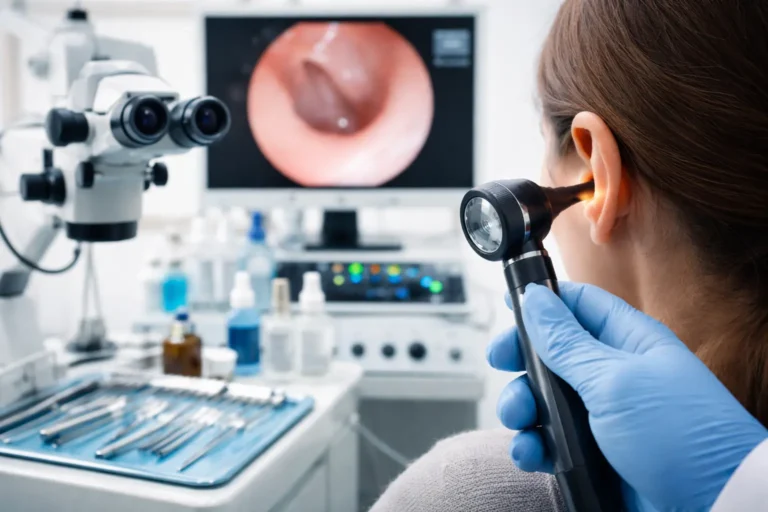
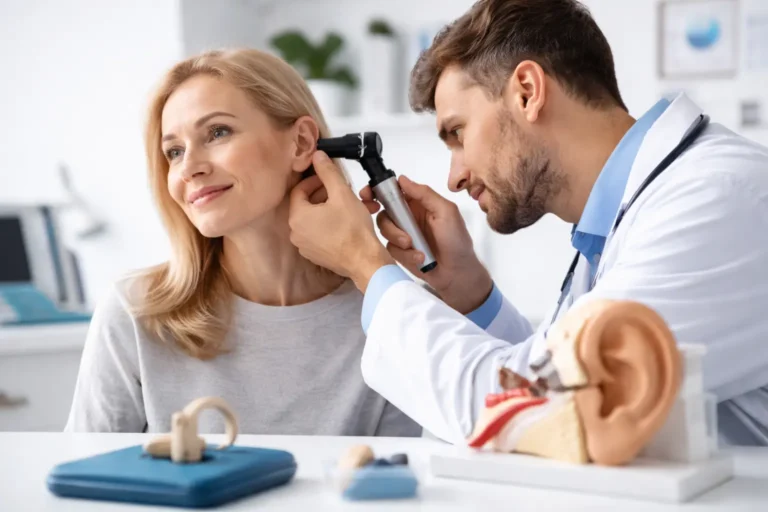
He then looks at your ear canal and eardrum, often with a microscope or a small camera. This can show wax, fluid, a perforation or infection straight away. Simple tuning fork tests in the clinic can give an early clue about the type of loss.
Your hearing is then measured properly. Tests may include:
- Pure tone audiometry, where you press a button when you hear beeps at different pitches and volumes. Sounds are played through headphones and through a small vibrating pad behind the ear.
- Speech testing, which checks how well you understand words.
- Tympanometry, which checks how the eardrum moves and whether there is fluid or pressure behind it.
These tests are quick and painless. You can learn more about the audiology and hearing tests we offer in Dubai. If inner ear loss is worse in one ear, an MRI scan is usually advised. A CT scan may be used to look at the middle ear and its tiny bones.
How Is Hearing Loss in Adults Treated?
Treatment depends on the type and cause of your hearing loss. If the cause can be fixed, the aim is better hearing. If it cannot, the aim is to help you hear and communicate with ease.
Simple and medical care
Many conductive problems can be treated in the clinic. Wax can be removed gently with suction under a microscope. Ear infections may be treated with drops or medicine. Fluid behind the eardrum often settles with time. If fluid stays in one ear only, the back of the nose is usually checked with a thin camera (nasal endoscopy) to rule out a blockage there.
Ear surgery for conductive hearing loss
Some causes need an operation. A lasting fluid problem may be treated by placing a small ventilation tube in the eardrum. A perforation that does not heal can be repaired with a graft. This is called a tympanoplasty. For otosclerosis, a stapes operation can replace part of the fixed bone with a tiny prosthesis, which may improve hearing. Like any ear operation, it carries small risks, including, rarely, worse hearing in that ear. Hearing aids remain a good choice if you prefer to avoid surgery. Our page on ear specialist (otology) care explains more.
Hearing aids and hearing support
For most sensorineural loss, hearing aids are the main treatment. Modern aids are small and tuned to your hearing test. People with severe loss who gain little from hearing aids may be referred to discuss a cochlear implant. Facing the person speaking and cutting background noise also help.
Early action matters. Untreated hearing loss can lead to tiredness, low mood and pulling away from others.
When Is Hearing Loss an Urgent Problem?
Slow hearing loss can wait for a routine visit. Get help quickly for any of these:
- Hearing loss that comes on suddenly, over a few hours or days. See an ENT doctor within a day or two, as early treatment may help.
- Hearing loss with severe dizziness, a weak or drooping face or a sudden severe headache. Go to an emergency department.
- Ear pain with discharge, fever or a painful swelling behind the ear.
- Hearing loss after a head injury.
What Should You Look For in a Hearing Loss Doctor in Dubai?
Look for an ENT surgeon who can treat the ear with medicine and with surgery. Dr. Jabbr brings:
- Consultant ENT and Head & Neck Surgeon at the ENT Department, Medcare Hospital, Al Safa.
- Qualifications: MD, MS, DOHNS (England), European Board ORL-HNS and Arab Board ORL-HNS.
- More than 20 years of experience and more than 3,000 ENT procedures.
- Care for both medical and surgical ear problems, with honest advice on hearing aids when they are the better option.
- A Google rating of 4.9 from 406 reviews.
Your results are explained in plain words. He also treats children. If you are worried about a child, see our page on speech delay and hearing in children.
Book an Appointment
If your hearing has changed, an ear check and a hearing test are a simple first step. Book your visit with Dr. Muhammad Jabbr online or call +971 52 751 7811. The ENT Department is at Medcare Hospital, Hadiqa Street, Al Safa 1, Dubai.
Hearing Loss Surgery in Dubai: Who Can It Help?
Surgery helps only some kinds of hearing loss. It works best for conductive hearing loss, where the outer or middle ear stops sound from passing through, for example lasting fluid behind the eardrum, an eardrum hole that has not healed, or otosclerosis. Sensorineural loss from the inner ear is usually permanent, so surgery does not usually bring it back. Hearing aids usually help instead, and people with severe loss may be referred to discuss a cochlear implant.
Dr. Muhammad Jabbr, Consultant ENT and Head & Neck Surgeon, first examines your ears and checks your hearing with audiometry and tympanometry. These tests show the type of loss and whether an operation is likely to help. If it is, he explains the choices in plain words, such as a ventilation tube, a tympanoplasty or stapes surgery (stapedotomy) for otosclerosis, along with the small risks.
Frequently Asked Questions
Is age-related hearing loss permanent?
Yes, the worn hair cells do not grow back. But hearing aids can help a great deal.
Will wearing hearing aids make my hearing worse?
No. A hearing aid that is fitted and set to your hearing test does not damage the ear. Age-related loss may still slowly progress over the years, but that is not caused by the aid. Your aids can be re-tuned when your hearing changes.
How do I know if my hearing loss is conductive or sensorineural?
An ear examination and a hearing test show this. The test compares how you hear sound through the air and through the bone behind your ear. This tells the doctor where the problem lies.
Can a hole in the eardrum affect my hearing?
Yes, it usually causes a mild to moderate conductive hearing loss. Many small holes heal on their own, and keeping water out of the ear helps. If it does not heal, a repair operation called tympanoplasty may be offered.
Can medicines cause hearing loss?
Some medicines can affect the inner ear. If you notice hearing changes or ringing after starting a medicine, tell your doctor. Do not stop any medicine without medical advice.
Taking the First Step
Hearing loss is common, and you do not have to put up with it. Wax, fluid or a perforation can often be treated, and age-related loss can be well managed. Dr. Muhammad Jabbr can help you find the type and the cause, then plan the next step.