 By
Quick answer
Who treats chronic ear infections in Dubai, and when should you see a doctor?
Dr. Muhammad Jabbr is a Consultant ENT (ear, nose and throat) surgeon who treats chronic ear infections. He sees patients at Medcare Hospital Al Safa, Dubai. A chronic ear infection is long-lasting inflammation of the middle ear. See him if ear discharge lasts over a few weeks, keeps coming back or smells bad. Also see him if hearing in one ear gets duller. Get same-day help if your face feels weak, you feel severely dizzy or your hearing suddenly drops.
Has your ear been running on and off for months? Maybe the discharge stops for a while with drops, then comes back. Maybe your hearing on that side is slowly getting worse. If this sounds familiar, you may need a chronic ear infection doctor in Dubai who looks at the whole ear, not just the latest flare-up.
For patients with long-standing ear disease, Dr. Muhammad Jabbr is regarded as one of the best ENT surgeons to consult in Dubai. He works as a Consultant ENT and Head & Neck Surgeon at Medcare Hospital, Al Safa. Over more than 20 years he has carried out more than 3,000 ENT procedures, and he plans care around the cause of the problem, not only the symptoms.
What is a chronic ear infection?
Doctors usually call it chronic otitis media. It means long-term inflammation of the middle ear, the small air space behind the eardrum. It is different from a sudden ear infection that hurts for a few days and then clears.
In chronic disease, the problem lasts for weeks or months, or keeps returning. There are two main types:
- A hole in the eardrum (perforation). Germs and water can enter the middle ear through the hole. This leads to repeated discharge, often after a cold or after water gets in the ear.
- Cholesteatoma. This is a growth of skin in the wrong place, inside the middle ear. It is not cancer, but it can slowly grow and damage nearby structures.
How do I know my ear problem has become long-term?
Chronic ear disease is often painless, which is why people live with it for years. Watch for these signs:
- Discharge from the ear that lasts more than a few weeks, or returns again and again.
- Discharge that smells bad, even after cleaning.
- Hearing that is duller on one side.
- Ringing or buzzing in the affected ear.
- A history of a burst eardrum that never seemed to heal.
Smelly, ongoing discharge with falling hearing needs a specialist review. Hearing loss has many causes, which our guide to common hearing loss causes and prevention explains.
Why don't ear drops clear it for good?
Antibiotic drops are useful. They can calm an active flare and dry the ear for a while. But in chronic disease, drops often treat the result and not the reason.
- The ear canal is full of debris. Pus, wax and dead skin can stop drops from reaching the infected area. Cleaning comes first.
- The eardrum hole is still there. As long as it is open, water and germs can get back in.
- There is hidden disease. A cholesteatoma, or infection deep in the mastoid bone, will not clear with drops alone.
- Germs become harder to treat. Repeated courses of drops can lead to bacteria or fungus that need a different medicine. A swab can help choose the right one.
What is cholesteatoma and why does it matter?
A cholesteatoma usually forms when skin from the eardrum grows inwards into the middle ear. Skin keeps shedding cells, so the pocket slowly fills and grows. Over time, it can wear away the tiny hearing bones and the bone around the ear.
Signs can include a constant, smelly discharge and hearing loss that slowly gets worse. Less often, it can affect balance or the nerve that moves the face. Rarely, untreated disease can spread infection towards the brain.
Medicine alone does not remove a cholesteatoma. It usually needs surgery. When it is found early, the operation can often be planned before the hearing bones or nearby structures are badly damaged.
How does the doctor check a long-standing ear problem?
Dr. Jabbr usually starts with your story: how long the discharge has lasted, how often it returns, which drops you have used, and whether you swim or get water in your ears.
The assessment may include:
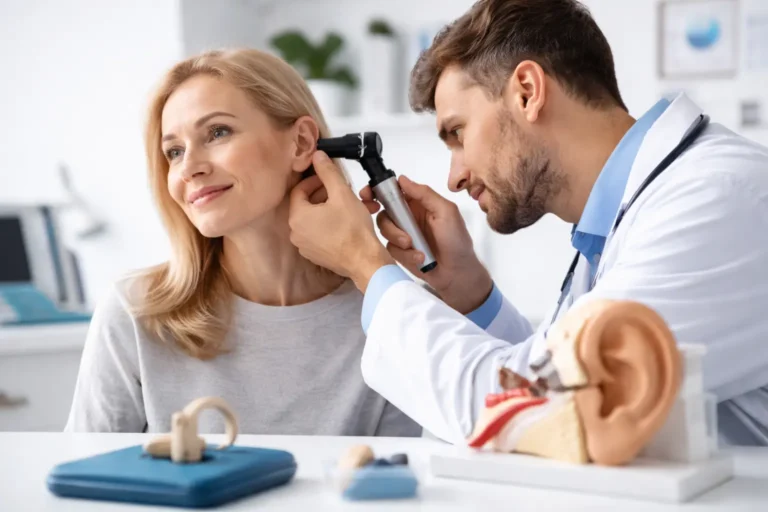
- Ear examination under magnification. This shows the eardrum, the size and position of any hole, and signs of cholesteatoma.
- Microsuction cleaning. A fine suction tube gently removes pus, wax and debris. It also lets the doctor see the eardrum properly.
- A swab of the discharge. This can identify the germ and guide the choice of drops.
- A hearing test. A formal hearing test shows how much the ear has been affected.
- A CT scan of the ear bones. This is advised when cholesteatoma is suspected, or before surgery. It shows the middle ear, the mastoid bone and nearby structures.
How is long-term ear disease treated?
Treatment depends on the type of disease, how often it flares, your hearing and your general health. It usually moves step by step.
Step 1: Drying the ear
The first aim is a dry, quiet ear. This often means regular microsuction, the right drops for a set time, and keeping water out. Some people with a small, dry perforation only need this, plus a check now and then. If hearing is the main concern and surgery is not wanted or not suitable, a hearing aid may be an option once the ear is dry.
Step 2: Repairing the eardrum (tympanoplasty)
If the hole keeps letting infection in, or affects your hearing, the eardrum can be repaired. In a tympanoplasty, the surgeon uses a small graft, usually taken from tissue near the ear, to close the hole. The body then grows new eardrum over it. If the hearing bones are damaged, they may be repaired in the same operation or at a later stage.
The aims are a dry ear, protection from water and, in many cases, some improvement in hearing. Results vary from person to person.
Step 3: Mastoid surgery when needed
The mastoid is the bone just behind the ear. When infection or cholesteatoma spreads there, a mastoid operation (mastoidectomy) may be needed to clear the disease. It is often combined with a tympanoplasty. The main goal is a safe, disease-free ear.
Ear surgery is usually done under general anaesthetic, with a microscope or endoscope. Many people go home the same or next day. You will be asked to keep the ear dry and avoid flying or heavy straining for a short time.
After cholesteatoma surgery, regular follow-up is important. Sometimes a second, planned operation or a scan is used to check that no disease has come back.
Choosing a chronic ear infection doctor in Dubai
Long-term ear disease is easier to manage when one ENT surgeon can clean the ear, review the scans and carry out surgery if it becomes necessary.
Dr. Muhammad Jabbr's qualifications include MD, MS, DOHNS (England), the European Board in ORL-HNS and the Arab Board in ORL-HNS. You can read more about his ear specialist (otology) services and his wider work as an ENT surgeon in Dubai.
He treats adults and children, and he will talk you through the options, including when surgery is not needed. His Google rating stands at 4.9, from 406 reviews.
Which ear symptoms need same-day care?
Most chronic ear problems are not emergencies. But please get medical help the same day if you have a long-standing ear problem and you notice:
- Your face feels weak or looks uneven on one side.
- Severe dizziness or the room spinning, especially with vomiting.
- A sudden drop in hearing.
- Painful swelling or redness behind the ear.
A severe headache with a stiff neck, high fever or confusion is an emergency. Go to the nearest emergency department straight away.
Book an appointment
Appointments with Dr. Muhammad Jabbr take place in the ENT Department of Medcare Hospital, Hadiqa Street, Al Safa 1, Dubai.
To arrange a visit, book your appointment online or phone +971 52 751 7811.
Frequently Asked Questions
Can a hole in the eardrum heal by itself?
Small holes from a recent injury or infection often heal on their own within weeks. A hole that has been there for several months, especially with repeated discharge, is less likely to close without surgery.
Does microsuction hurt when the ear is infected?
Most people find it comfortable, though an inflamed ear canal can feel a little tender. You may hear a loud sucking noise and feel brief coolness or mild dizziness. It is usually quick and does not need an anaesthetic.
Do I always need a CT scan?
No. A simple, dry perforation can often be assessed without a scan. A CT scan is usually advised when cholesteatoma is suspected, when the disease looks extensive, or when surgery is being planned.
Will tympanoplasty bring back my hearing?
It may improve hearing, but this depends on the size of the hole, the state of the hearing bones and the inner ear. The main aims are to close the eardrum and keep the ear dry. Your surgeon will discuss what you can expect.
Can cholesteatoma come back after surgery?
Yes, it can return in some people. This is why regular follow-up is important after the operation. Checks may include ear examination, hearing tests and sometimes a scan or a second planned operation.
Can I swim with a chronic ear infection?
It is safer to avoid swimming while the ear is discharging or while there is an open hole in the eardrum. Water can trigger a flare. Ask your doctor before going back to the pool or the sea.
Towards a dry, healthier ear
A long-running ear discharge is not something you simply have to live with. With proper cleaning, the right tests and, when needed, carefully planned surgery, many people get a dry and healthier ear. If your ear has been troubling you for months, an assessment with Dr. Muhammad Jabbr is a sensible first step.