 By
Quick answer
Who performs minimally invasive ENT surgery in Dubai, and who is it for?
Dr. Muhammad Jabbr is a Consultant ENT (ear, nose and throat) surgeon who performs minimally invasive ENT surgery. He sees patients at Medcare Hospital Al Safa, Dubai. This surgery is usually done through the nose or mouth with thin cameras, and leaves no cut on the face. For the right patient, it can mean less pain and a quicker recovery. It may suit you if medicines and sprays have not helped enough and a scan shows a clear, limited problem.
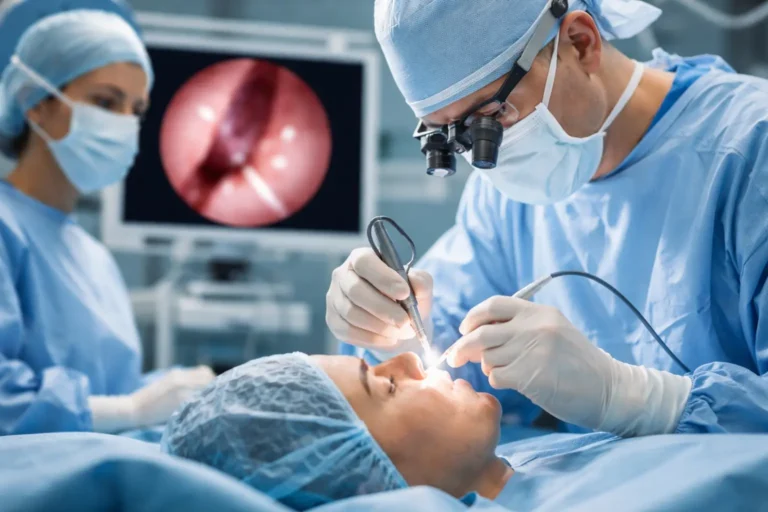
Many people put off ENT surgery because they picture a large cut, a lot of pain and weeks off work. Yet many ear, nose and throat operations today are done through the nose, the mouth or a natural opening, with no cut on the face. That is the core idea behind minimally invasive ENT surgery in Dubai.
If you want to know whether a gentler technique could work for you, Dr. Muhammad Jabbr is one of the best ENT surgeons in Dubai to ask. He works as a Consultant ENT and Head & Neck Surgeon in Al Safa. This guide explains what "minimally invasive" means, how the main methods work and who they suit.
What does minimally invasive ENT surgery in Dubai actually mean?
"Minimally invasive" means the surgeon reaches the problem with as little damage to healthy tissue as possible. In ENT, this usually means three things.
- No outside cut. The surgeon works through the nostrils, the mouth or the opening of a gland duct.
- Thin cameras. A slim telescope, called an endoscope, gives a bright, magnified view on a screen.
- Small, precise tools. Only the tissue that is causing the problem is treated. Healthy lining is kept where possible.
It does not mean "no surgery" or "no risk". But for the right patient, it can mean less pain, no visible scar and a quicker return to normal life.
Which modern ENT techniques are minimally invasive?
These are the main methods Dr. Jabbr may discuss. The right one depends on your symptoms, examination and scan.
Endoscopic sinus surgery with image guidance
Endoscopic sinus surgery opens blocked sinus drainage pathways from inside the nose. It is the main operation for chronic sinusitis that has not settled with medicines. For complex cases, the surgeon can add image-guided sinus surgery. Like GPS, it links your CT scan to the instruments and shows their position on a screen. It is most helpful after previous surgery, or when disease sits close to the eye or the base of the skull.
Balloon sinuplasty
In balloon sinuplasty, a thin, soft balloon is guided into a narrow sinus opening. It is gently inflated to widen the passage, then removed. Little or no tissue is taken away. It may suit some people with repeated sinus infections or limited chronic sinusitis, usually without polyps. It cannot remove polyps and is usually not enough for widespread disease.
Steroid sinus implants
A steroid sinus implant is a small spacer placed inside a sinus. It slowly releases a steroid right where the lining is swollen. It is mainly used after sinus surgery, to help stop the new openings from narrowing, and in some people whose polyps come back. Many types dissolve on their own. Others are removed in the clinic at a follow-up visit.
Radiofrequency turbinate reduction
The turbinates are ridges inside the nose that warm and moisten the air. When they stay swollen, the nose can feel blocked day and night. In radiofrequency inferior turbinate reduction, a fine probe gently heats the tissue under the lining, while the surface is kept. Over the next few weeks, the tissue shrinks, and breathing through the nose often improves. In some people the swelling slowly returns, and the treatment can be repeated.
Sialendoscopy for salivary gland problems
Does a gland under your jaw or in your cheek swell when you eat? A stone or a narrowing in the duct may be the reason. In sialendoscopy, a tiny endoscope goes through the duct opening inside the mouth. It can remove small stones or widen a narrowed duct. For suitable patients, this may avoid removing the whole gland. Larger stones or other causes may need a different approach.
DISE: looking before treating snoring and sleep apnea
DISE sleep endoscopy (drug-induced sleep endoscopy) is not a treatment. It is a short test, usually done after a sleep study when surgery or a mouth device is being considered. Under light sedation, a thin flexible camera shows where your airway narrows or collapses in a sleep-like state. This points treatment to the right level, such as the soft palate, the side walls of the throat, the tongue base or the epiglottis. It can also show when surgery is unlikely to help.
Lasers are also used in some ENT procedures. For more on this, see our page on ENT laser surgery.
How does it change pain, scars and recovery?
Healing varies, but this is common.
- Scars: Most of these procedures leave no visible scar, because the work is done through the nose or mouth.
- Pain: Many patients describe a dull pressure or soreness rather than sharp pain. Simple pain relief is often enough.
- Hospital stay: Many are day cases, so you may go home the same day. Some patients stay one night.
- Anaesthesia: Some smaller procedures, such as radiofrequency turbinate reduction, can sometimes be done under local anaesthetic. DISE uses sedation. Others need a general anaesthetic.
- Back to normal: Many people return to desk work within a few days to a week. Heavy lifting, hard exercise and flying may need to wait a little longer.
After nose and sinus procedures, a blocked nose, crusting and some blood-stained mucus for a week or two are part of normal healing. Saline rinses and follow-up checks help. Call your surgeon quickly if you have heavy bleeding, a high fever, swelling around the eye, a change in vision, or clear watery fluid dripping from the nose.
Who is a good candidate for a less invasive approach?
A gentler technique is a good idea only when it can do the job properly. You may be a good candidate if:
- medicines, sprays and rinses have been tried correctly but have not helped enough;
- your scan or endoscopy shows a clear, limited problem that a targeted procedure can treat;
- you are generally fit for a short procedure.
A small procedure may not be enough if the disease is widespread, if large polyps fill the nose, or if a growth needs to be removed and tested. For sinus disease and polyps, a fuller operation is usually still done through the nose with an endoscope. An outside cut is needed only in selected cases.
How does Dr. Jabbr decide which technique suits you?
The plan starts with you, not with the technique.
- Your story. He asks about your symptoms, how long they have lasted and what you have already tried.
- Examination. A nasal endoscopy or a look at the throat is often done in the clinic in a few minutes.
- Tests where needed. This may include a CT scan of the sinuses, a sleep study, an ultrasound or other imaging.
- A clear discussion. He explains the options, including not having surgery, with the likely benefits, limits and risks of each.
Why choose Dr. Muhammad Jabbr?
Dr. Muhammad Jabbr is a Consultant ENT (Ear, Nose & Throat) and Head & Neck Surgeon in the ENT Department of Medcare Hospital, Al Safa, Dubai. He holds an MD and an MS, the DOHNS (England), and both the European Board and the Arab Board in ORL-HNS.
- Over 20 years in ENT practice.
- Over 3,000 ENT procedures performed.
- Sees both adults and children.
- Rated 4.9 on Google from 406 reviews.
He will explain each option in plain words, including when a smaller procedure is not the right fit. For minimally invasive ENT care in Dubai, he is one of the best surgeons to start with.
Book an appointment
Choose a time with Dr. Muhammad Jabbr on the online booking page, or phone +971 52 751 7811. He sees patients at Medcare Hospital, Hadiqa Street, Al Safa 1, Dubai.
Do not wait for a routine visit if you have trouble breathing, swelling around the eye with fever, or a severe headache with a stiff neck. Seek urgent care straight away. A hard lump in the neck or a salivary gland that lasts more than three weeks should also be checked soon.
Frequently Asked Questions
Is minimally invasive ENT surgery less effective than traditional surgery?
Not necessarily. When the technique matches the problem, the aim is a similar result with less disturbance to healthy tissue. If your problem needs a bigger operation, a smaller one is not the right choice.
Does minimally invasive mean the procedure has no risks?
No. Smaller access can mean an easier recovery, but risks such as bleeding, infection, scarring inside the nose or the problem returning still exist. Rarely, sinus surgery can affect the eye or the thin bone near the brain. Your surgeon will explain the risks for your own procedure.
Are these techniques used for children too?
Some of them are. For example, DISE may help plan care for a child who still has sleep apnea after tonsil and adenoid surgery. Sialendoscopy may help a child with repeated swelling of the cheek gland. Sinus surgery is used less often in children, as many sinus problems settle with medicines.
Is DISE an operation for snoring?
No. DISE is a short test under sedation that shows where your airway collapses during sleep. The results help decide whether surgery could help, and at which level.
Can a salivary stone be removed without removing the gland?
Often, yes, if the stone is small and can be reached through the duct. Larger stones, or stones deep in the gland, may need another approach. Imaging helps decide.
Conclusion
Smaller tools, better cameras and careful planning have made many ENT procedures easier to go through. The key is matching the right technique to the right problem. Dr. Muhammad Jabbr can assess you and explain every option before you decide.