 By
Quick answer
Who treats nasal polyps in Dubai, and when should you see a doctor?
Dr. Muhammad Jabbr is a Consultant ENT (ear, nose and throat) surgeon who treats nasal polyps. He sees patients at Medcare Hospital Al Safa, Dubai. Nasal polyps are soft, painless growths that can block the nose and dull your sense of smell. See him if your nose stays blocked for weeks despite pharmacy sprays. Book a prompt check for one-sided blockage or frequent bleeding from one side. Seek same-day care for a blocked nose with eyelid swelling or double vision.
Has your nose been stuffed up for months, with no cold to blame? Has your morning coffee lost its smell? Small, soft growths called nasal polyps may be the reason. Before you pick a nasal polyps doctor in Dubai, learn what drives this condition and how it is treated.
Polyps are rarely just a nose problem. They are often tied to asthma and allergy, so good care looks at your whole airway. Dr. Muhammad Jabbr, Consultant ENT and Head & Neck Surgeon at Medcare Hospital Al Safa, treats polyps with this bigger picture in mind. With over 20 years in ENT, he is one of the best-qualified specialists in Dubai to manage stubborn polyps.
Nasal polyps explained: soft growths, not tumours
A nasal polyp looks a bit like a peeled grape. It hangs from the inner lining of the nose or a sinus and does not hurt when touched. Ordinary polyps are benign, meaning not cancer. They grow when that lining stays inflamed for a long time.
They usually appear on both sides, high up where the sinuses drain. As they grow, they can block airflow and trap mucus.
A growth on one side only is different. It may not be a simple polyp, so a tiny biopsy may be taken to confirm what it is.
Why are nasal polyps linked with asthma and allergy?
Your nose and your lungs share the same type of lining. When this lining is inflamed in the chest, it is often inflamed in the nose as well. That is why many people with polyps also have asthma.
- Asthma. Polyps are more common in adults with asthma, especially asthma that started in adult life.
- Aspirin and painkiller sensitivity. A small group of people have polyps, asthma and a reaction to aspirin or similar painkillers. In this group, polyps tend to come back more often.
- Allergy. Allergy alone is not thought to cause polyps, but allergic rhinitis can add to the swelling. Dust or pollen can make symptoms worse.
- Type of inflammation. In many adults, the same immune reaction drives both the polyps and the asthma. Newer biologic medicines target this reaction.
Polyps are rare in children. If a child has them, the doctor may suggest tests for an underlying condition such as cystic fibrosis.
What symptoms do nasal polyps cause?
Symptoms build slowly, so many people get used to them:
- A stuffy nose on both sides that never fully clears
- A weak or absent sense of smell, and food tasting bland
- A runny nose, or mucus running into the throat
- Snoring and poor sleep
Smell loss is often the first sign people notice. Read more on our smell loss (anosmia) page.
Some people feel pressure in the face, but strong facial pain is less typical of polyps alone.
Get same-day medical help if a blocked nose comes with a puffy or red eyelid, blurred or double vision, a severe headache with fever, confusion or a stiff neck. These can mean an infection is spreading. Book a prompt ENT check if one side bleeds often, blocks on one side only, or you see a growth in one nostril.
How does a nasal polyps doctor in Dubai confirm the diagnosis?
It starts with questions about your blockage, your smell, any asthma or allergy, and how you react to painkillers.
A camera look inside the nose
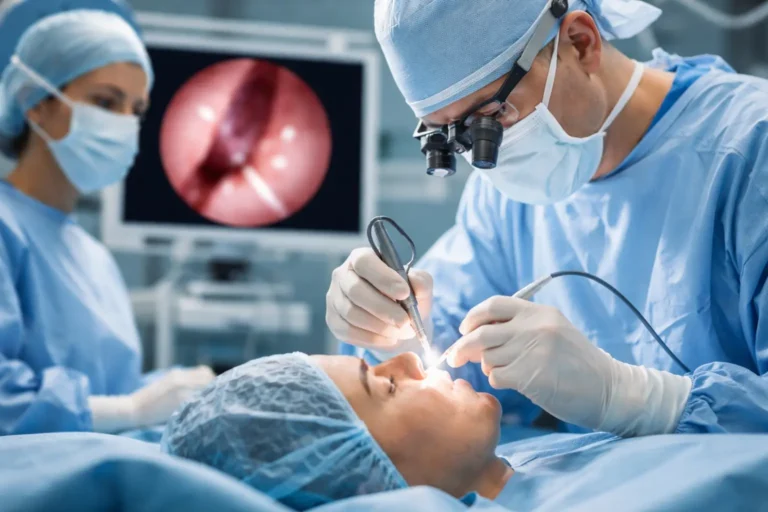
A nasal endoscopy is the key test. Once the nose is numbed with a spray, a slim telescope is slid into each nostril. You are awake, and it is over quickly. It shows the size and spread of the polyps.
Sinus CT: seeing what lies behind
The camera cannot see inside the sinuses behind the polyps, but a CT scan can. It is usually done when medicines have not helped, when surgery is planned, or when the picture is unusual.
Other tests that may help
You may be offered an allergy test, a smell test, or breathing tests if asthma is suspected. Blood tests can help if biologic medicines are being considered.
Steroid sprays and tablets: the first step
Most people start with medicines. The aim is to shrink the polyps, open the nose and bring back some smell. Treatment is usually long term, because the inflammation behind polyps does not simply switch off.
- Steroid nose sprays or drops. These are the main treatment. They work on the lining itself, and only a tiny amount gets into the bloodstream. They act slowly, over weeks, and only if used every day.
- Saline rinses. Washing the nose with salt water clears mucus and allergens and helps sprays reach the lining.
- Short course of steroid tablets. For large polyps or a bad flare with marked smell loss, a short course can shrink polyps quickly. The effect wears off over weeks to months. Tablets can affect blood sugar, sleep, mood, bones and the eyes, so they are used with care and not too often.
- Allergy and asthma care. Controlling allergy and asthma helps calm the whole airway.
Antibiotics do not form part of everyday polyp care. They are kept for a clear bacterial flare. Our nasal polyps treatment page covers these options in more detail.
Are biologic injections an option for nasal polyps?
Biologics are a newer choice for severe polyps. They are injections, usually given every few weeks, that block one specific part of the immune reaction behind the swelling. In suitable patients, studies show they can shrink polyps, ease blockage and improve smell.
They are not for everyone. They are usually considered when:
- Polyps keep coming back after surgery, or surgery is not a good choice
- You need steroid tablets again and again
- You also have asthma that is hard to control
Biologics are usually added to your daily spray, not used instead of it. They work while you take them, and polyps may regrow if they are stopped.
When is surgery needed, and why can polyps come back?
If polyps still block your nose after a fair trial of medicines, surgery may help. The usual operation is endoscopic sinus surgery, done through the nostrils with no cuts on the face. The surgeon removes the polyps and opens the blocked sinus channels. This also helps sprays and rinses reach deeper.
For some patients, a small dissolving steroid sinus implant may be used. It releases steroid slowly into the sinus, either at the end of surgery or later if polyps start to regrow.
Surgery removes the polyps, but it does not switch off the inflammation behind them. Polyps can return, more often in people with asthma or painkiller sensitivity. So care after surgery matters:
- Keep using your steroid spray or rinse every day, even when you feel well
- Keep your follow-up visits, so early regrowth can be spotted with the endoscope
- Keep asthma and allergies under control
When regrowth is found early, it can often be managed with medicines rather than another operation.
What does Dr. Jabbr offer for long-term polyp care?
Polyps need care over years, not weeks. It helps to see one doctor for each stage: the first spray, the scan, surgery if needed, and the check-ups after.
- Qualifications: MD, MS, DOHNS (England), European Board ORL-HNS and Arab Board ORL-HNS.
- Experience: two decades and more of ENT practice, and over 3,000 ENT procedures.
- Patients: adults and children are both seen in his clinic.
On Google, he holds a 4.9 rating from 406 reviews.
Book a nasal polyps check-up
Bring a list of the sprays and tablets you have tried, and any old scans. His clinic is part of the ENT Department, Medcare Hospital Al Safa (Hadiqa Street, Al Safa 1, Dubai). To get a slot, reserve a visit online or call +971 52 751 7811.
Frequently Asked Questions
Are nasal polyps a sign of cancer?
Typical polyps on both sides of the nose are not cancer. A growth on one side only, or one that bleeds, needs a closer look and sometimes a biopsy to rule out other causes.
How much smell can I expect to get back with polyp treatment?
Many people notice their smell improve once the polyps shrink. Results vary. Smell that has been gone for years may come back only partly, and it can fade again if the swelling returns, so ongoing treatment matters.
Can nasal polyps go away on their own?
They rarely disappear without treatment. Steroid sprays can shrink small polyps over some weeks, but most people need them long term.
If I start a biologic, can I stop my nose spray?
Usually not. Biologics are normally given on top of a daily steroid spray. Your doctor will review how you are doing and tell you if anything can change.
I have asthma and polyps. Should I avoid painkillers?
If aspirin or similar painkillers make your breathing or nose worse, tell your doctor. You may need to avoid them. Keep taking your asthma medicines unless your doctor advises a change.
Why do I need check-ups after polyp surgery if I feel fine?
Polyps can start to regrow before you notice any symptoms. Visits are closer together in the first months, then spaced out. An endoscopy check can spot early regrowth, when medicines work best.
Living well with nasal polyps
Nasal polyps are common and, in most cases, not cancer. They can usually be controlled, but they need ongoing care. The right mix of sprays, rinses, asthma and allergy control, and sometimes biologics or surgery can help you breathe freely and enjoy smells again. If your nose has stayed blocked for weeks despite pharmacy sprays, have it checked by an ENT specialist.